Knowledge Intelligence
CSL Knowledge
Turn operational knowledge into a usable resource.
CSL Knowledge helps organizations structure, document, validate and retrieve operational knowledge so it remains accessible, understandable and maintainable over time.
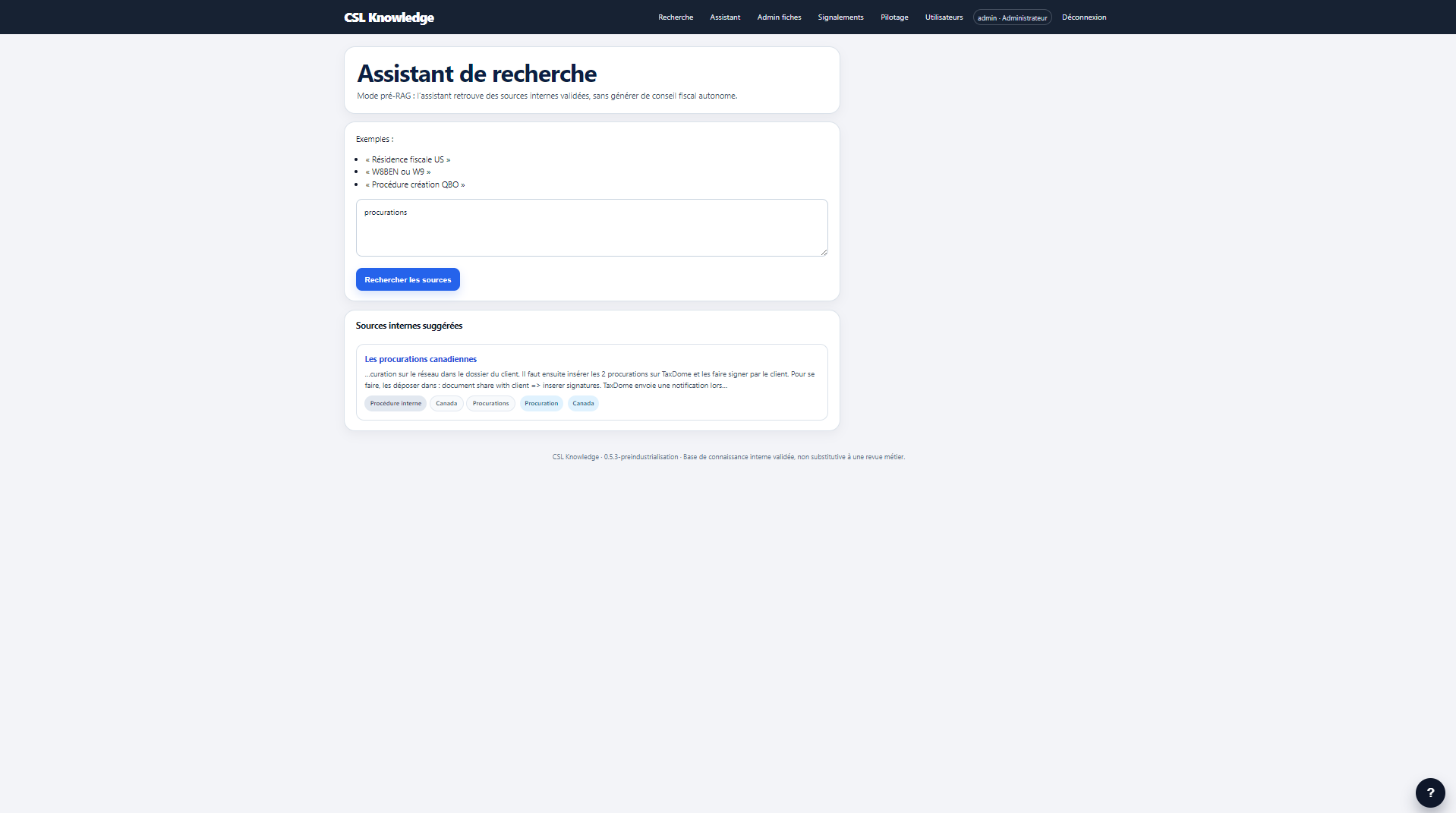
The starting point
Knowledge exists. The challenge is finding it and knowing when to trust it.
Procedures, business rules, internal practices, documents and expertise are often spread across files, messages, shared folders and knowledge held by individual team members.
Scattered information
Files, messages and shared folders each hold part of what the organization knows.
Knowledge dependent on individuals
Some of it exists only in the heads of a few people.
Difficult content maintenance
Without an owner or a review date, content ages unnoticed.
Unclear reliability
Nothing shows whether a piece of information was reviewed, or when.
Knowledge lifecycle
Structure the knowledge lifecycle.
CSL Knowledge treats operational knowledge as living content with sources, ownership, status and a review lifecycle.
- Capture
- Structure
- Document
- Source
- Validate
- Publish
- Retrieve
- Review
Structure and governance
Centralize knowledge without losing context.
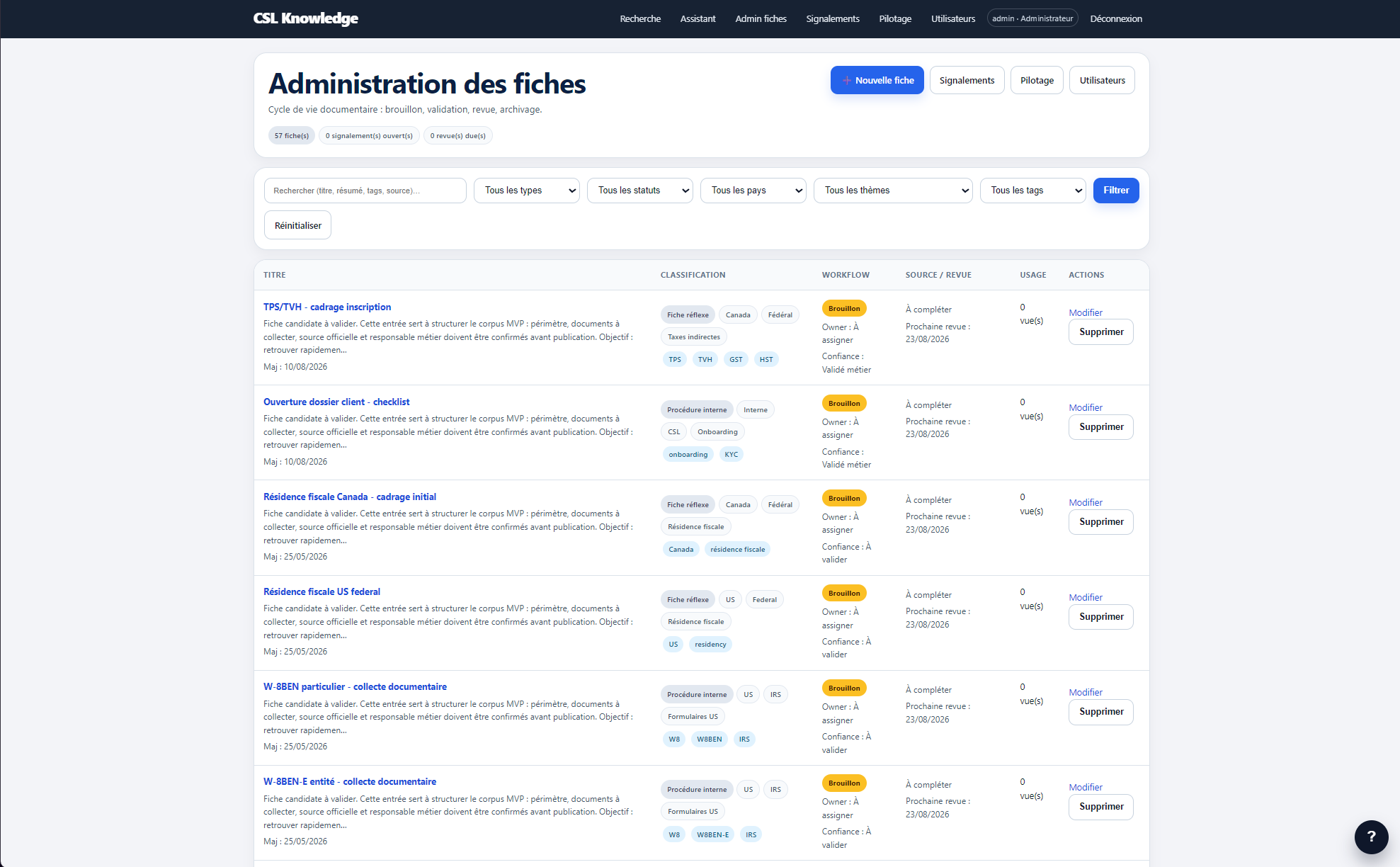
Knowledge can be organized as domain records linked to their documents, sources and contextual information.
- Knowledge records
- Documents and files linked to records
- Categorization
- Jurisdictions
- Contextual information
Governance
Know who creates, validates and maintains knowledge.
CSL Knowledge associates content with ownership and status so information that has not been reviewed is not presented as a definitive reference.
- Drafts
- Validated content
- Ownership
- Statuses
- Validation workflows
- Flagging
Sources, search and assistance
Keep knowledge connected to its sources.
Operational knowledge is more useful when its origin, its status and the date it should be reviewed can be understood.
- Sources
- Confidence levels
- Review dates
Find useful information faster.
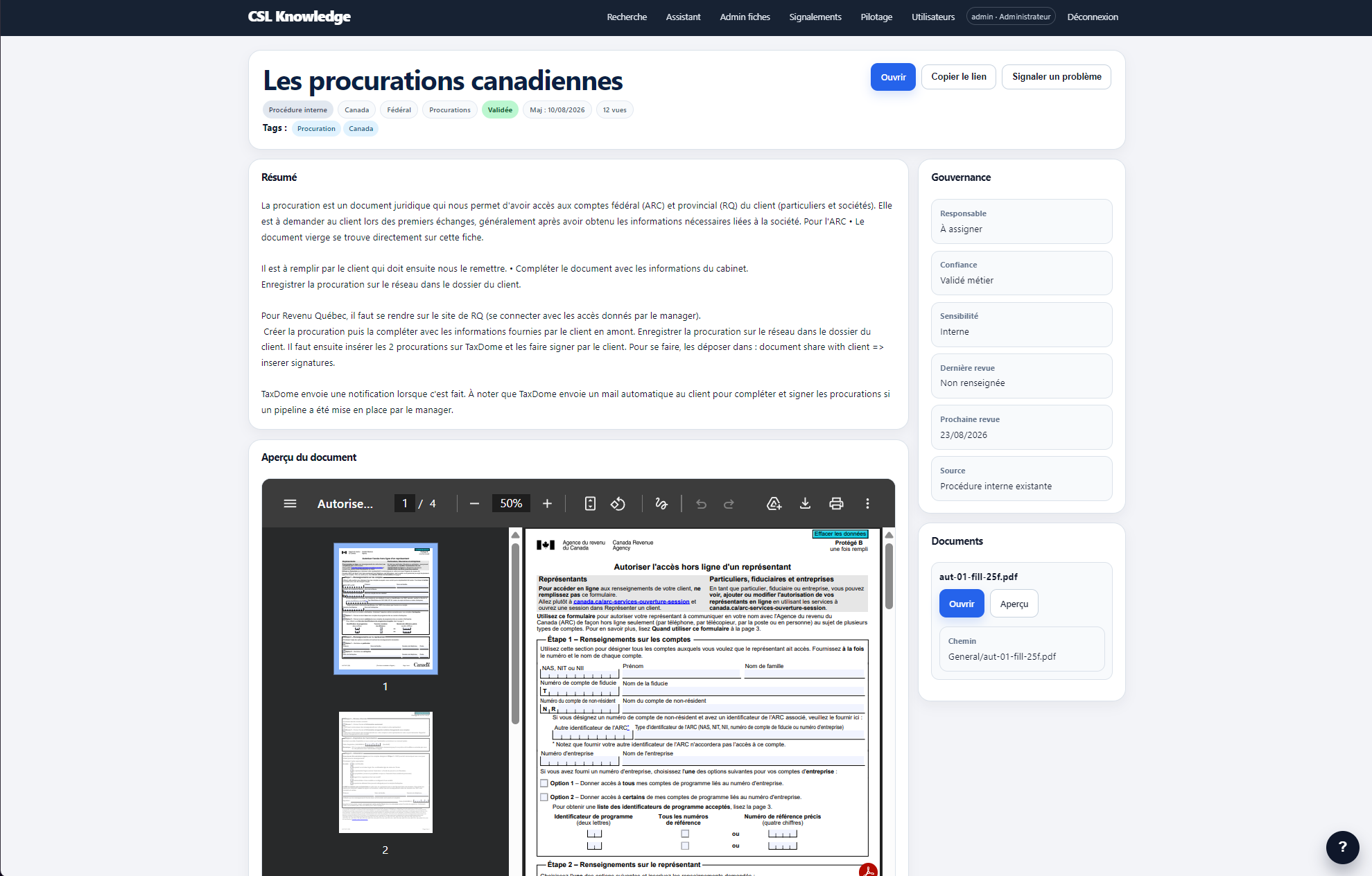
Search provides access to structured content without having to know in advance where the document or the record lives. Filters cover document type, tags, country, jurisdiction or topic, depending on available content.
- Search
- Filters by context and metadata
- Structured results
- Navigation to records
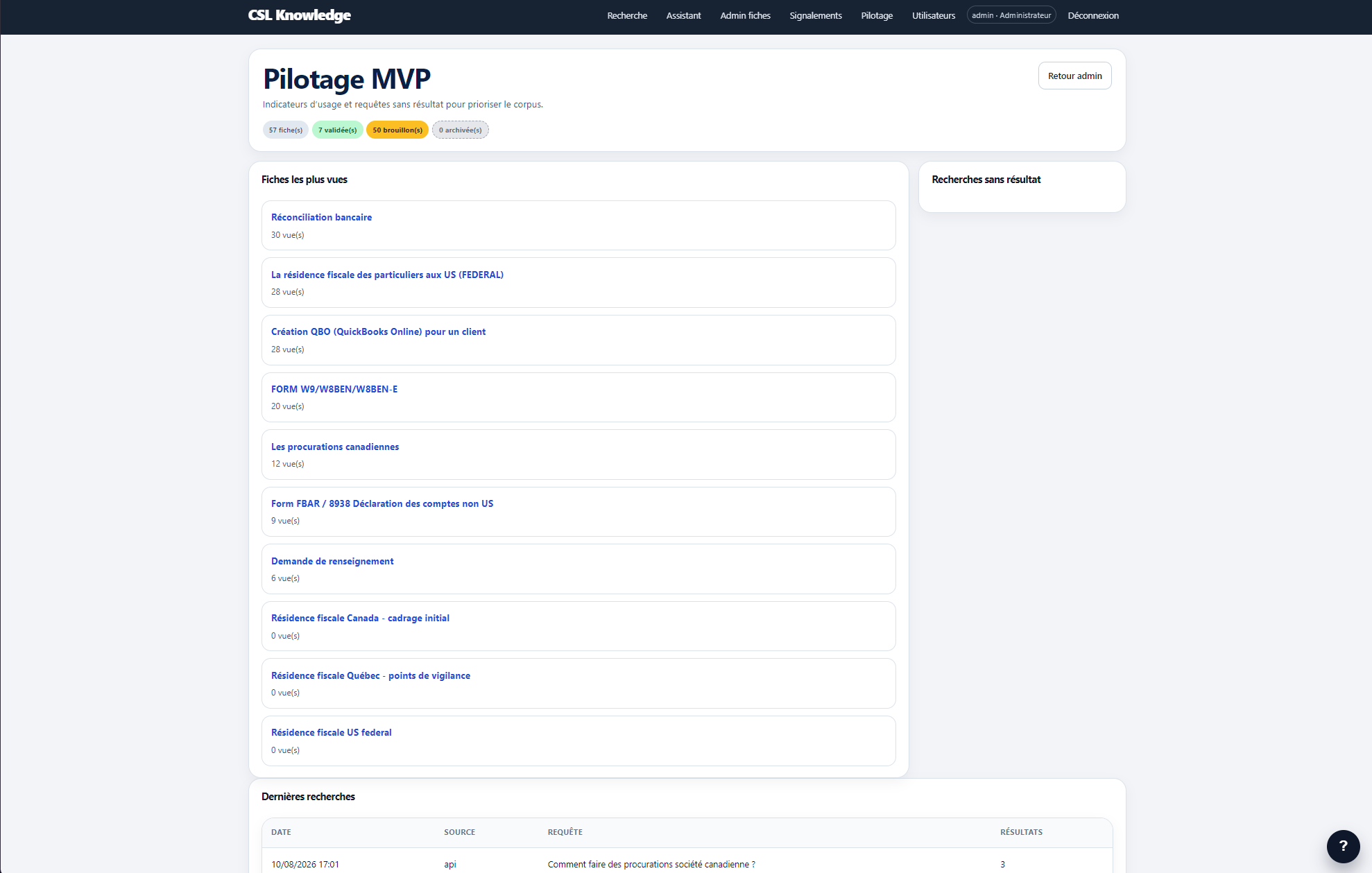
- No-result search tracking
Assistant
Explore knowledge in context.
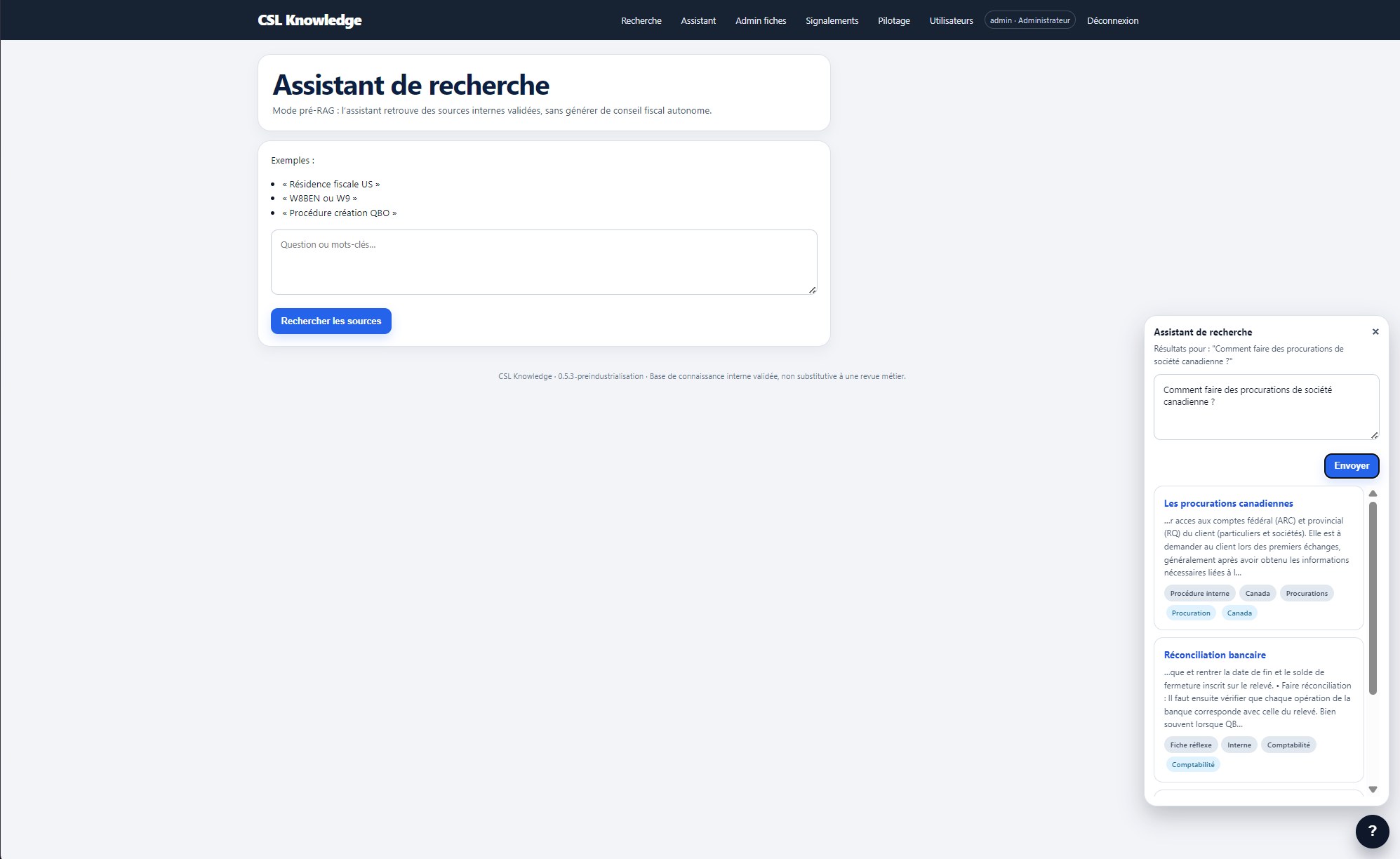
The CSL Knowledge assistant is designed to use the knowledge available within the environment while preserving content controls, sources and validation context.
- Conversational search
- Use of available knowledge
- Contextualization
- References to content
- Controls tied to validated content
Maintenance and analytics
Identify what the organization has not documented yet.
No-result searches and flagged content can help identify the topics for which the knowledge base needs to be extended or updated.
- Missing topics
- Update needs
- Continuous improvement of the corpus
Monitor knowledge quality and usage.
Tracking the corpus shows which content is consulted, which needs review and where the base should be strengthened.
- Analytics
- Tracking of validation status and content requiring review
- Corpus tracking
Roles
Roles aligned with the knowledge lifecycle.
Responsibilities around knowledge are split across distinct roles, according to the permissions defined within the organization.
Reader
Views the knowledge they have access to.
Contributor
Contributes to creating and updating content.
Validator
Takes part in validating knowledge.
Admin
Administers the environment and its permissions.
Governance and AI
AI does not replace governance.
Assisted search and knowledge exploration remain part of a system where content can be sourced, reviewed, validated and maintained by the people responsible for domain knowledge.
Use cases
Designed for organizations where domain knowledge matters.
- Internal procedures
- Business rules
- Operational documentation
- Technical knowledge
- Internal processes
- Specialized reference bases
- Knowledge transfer between team members
Interfaces
An environment built around knowledge.
Make organizational knowledge easier to use and maintain.
Discover how CSL Knowledge can help structure, govern and retrieve your organization's operational knowledge.